
Cart 0
We accept Visa, Mastercard, American Express & Discover.
We also accept cash on pick up for stock items and cash before pick up for special order items.
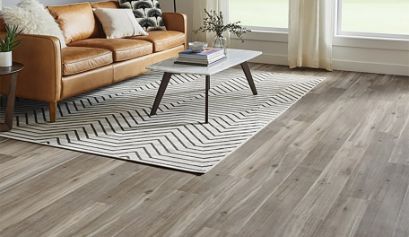
There are so many kinds of vinyl flooring: waterproof, peel and stick, sheet vinyl, and then all those acronyms. LVF, SPC, WPC. It can start to look like a jumble of alphabet soup. Let’s start with the ba
SPC stands for stone-plastic composite or stone-polymer composite. Both of these terms are used interchangeably. SPC is also sometimes referred to as Rigid Core luxury vinyl flooring. That’s because the stone-plastic composite core in this luxury vinyl is ultra-dense. Like WPC, SPC is 100% waterproof and is also called engineered vinyl flooring within the industry. SPC is great for both residential and commercial use.
LVP stands for luxury vinyl planks. These planks are made to be very durable, able to withstand high traffic, kids, and pets. Standard LVP consists of a vinyl core with a printed surface layer. It might have an attached underlayment, though not always, and it can either be glued down or floated with a locking mechanism. Some LVP is waterproof, with WPC or SPC cores.
Though there isn’t a defined industry standard for what “luxury” flooring is, you should expect top-notch visuals (typically wood-look), and a thick wear layer to protect the surface from wear and tear.
LVT is another word for luxury vinyl tiles. Like vinyl planks, you should expect the best of the best out of LVT flooring. Luxury vinyl tiles can stand up to the challenges of a busy home with pets and lots of traffic.
Luxury tiles are very durable and stylish, with high-quality, stone-look visuals, and even some realistic textures in some cases. More high-end LVT products will feature waterproof cores, attached underlayment, and a thick wear layer, though you won’t see these features with every single product.This is the acronym for luxury vinyl flooring. Luxury vinyl flooring is sort of the umbrella term that often encompasses WPC and SPC. LVF can also refer to vinyl that is not waterproof or rigid core, but that has a higher-quality visual, and usually a basic glue down or a lock installation mechanism.
LVP is the acronym for luxury vinyl planks. LVP refers to the specific shape of the vinyl flooring shape – a plank. Luxury vinyl plank flooring often features a wood-look image and the plank format helps sell the look.
LVT is the acronym for luxury vinyl tiles. Luxury vinyl tiles often feature a stone-look image and mimic natural stone flooring. Like LVP, LVT refers to the specific shape of the vinyl flooring– tile. These can come in different sizes but tend to keep the standard tile shape.
LVT is the acronym for luxury vinyl tiles. Luxury vinyl tiles often feature a stone-look image and mimic natural stone flooring. Like LVP, LVT refers to the specific shape of the vinyl flooring– tile. These can come in different sizes but tend to keep the standard tile shape.
LVP is the acronym for luxury vinyl planks. LVP refers to the specific shape of the vinyl flooring shape – a plank. Luxury vinyl plank flooring often features a wood-look image and the plank format helps sell the look.
LVT is the acronym for luxury vinyl tiles. Luxury vinyl tiles often feature a stone-look image and mimic natural stone flooring. Like LVP, LVT refers to the specific shape of the vinyl flooring– tile. These can come in different sizes but tend to keep the standard tile shape.
LVT is the acronym for luxury vinyl tiles. Luxury vinyl tiles often feature a stone-look image and mimic natural stone flooring. Like LVP, LVT refers to the specific shape of the vinyl flooring– tile. These can come in different sizes but tend to keep the standard tile shape.
Sheet vinyl is a multi-layer, durable flooring that’s easy to install and easy to clean. A vinyl sheet features a wear layer and a wear layer to protect it from scuffs and scratches, much like vinyl planks and tiles.
Vinyl sheets used to have a reputation for being “low-quality,” but those days are long gone. Popular sheet vinyl is made of quality materials and contains a fiberglass layer that lays the sheet flat and keeps it from curling. This fiberglass layer also allows sheet vinyl to be loose laid or installed using double-sided adhesive tape, instead of a more labor-intensive glue down installation.
Luxury vinyl sheets come with a huge range of stylish looks, including realist wood and looks, and more contemporary decorative surfaces. The best part? You get all of these benefits at an affordable price.
Vinyl and linoleum flooring are actually very different! At one time the only vinyl anybody knew about was sheet vinyl, which has an appearance fairly similar to linoleum. Because of this, a lot of people confuse the two. Here are the main differences between linoleum and sheet vinyl.
Linoleum:
- Made of natural materials
- Anti-microbial
- Anti-static properties
- Needs to be sealed every year
- Requires a professional installation
Luxury Vinyl Flooring:
- Made of durable PVC
- Protective wear layer
- Backing options for fiberglass, foam, or felt
- DIY-friendly installation
- Virtually no maintenance
While some vinyl products do have a scratch-resistant surface, no vinyl flooring is 100% scratch proof. Over time, scratches may occur. We recommend trying to keep the dog’s nails trimmed to help lessen the number of scratches.
You can put heavy appliances on vinyl tiles and planks as long as you use furniture pads or sliders under them. However, you should not install heavy appliances over loose laid sheet vinyl, because this could cause a pinch point and damage the floor.
For furniture, you should use felt furniture pads under the legs to prevent scratching the flooring. Never use rubber, as rubber can stain vinyl flooring.
You can also put most vinyl flooring under kitchen cabinets and appliances, but it’s a good idea to glue down those sections.
Even though vinyl flooring has a tough wear layer, it’s a good idea to use a mat under desk chairs. Over time, rolling desk chairs might cause some wear and tear. It’s better to be safe than sorry!
All vinyl flooring can be installed in basements, though some options will be more difficult to install. For example, a vinyl sheet that needs to be glued down will take more effort than a click-lock vinyl plank. You’ll need to make sure the cement subfloor is completely level, or thin flooring like sheet vinyl could show the imperfections through the surface and actually become damaged over time.
Our Vinyl Flooring is DIY friendly and easy to install.
Even if using waterproof vinyl flooring, we do not recommend vinyl flooring for outside or semi-outdoor areas. UV rays can cause fading and weather can damage the flooring over time. Using vinyl flooring outside may also void the manufacturer’s warranty. For these reasons, stick to using vinyl flooring indoors.
It is recommended to leave a small expansion gap around the perimeter for such extreme conditions, but the likelihood of expansion is very small. Not even flooding will cause waterproof vinyl flooring to expand. In fact, we tested this to prove our point.
That being said, other luxury vinyl flooring without a waterproof core, or a rigid core, will expand and contract.